
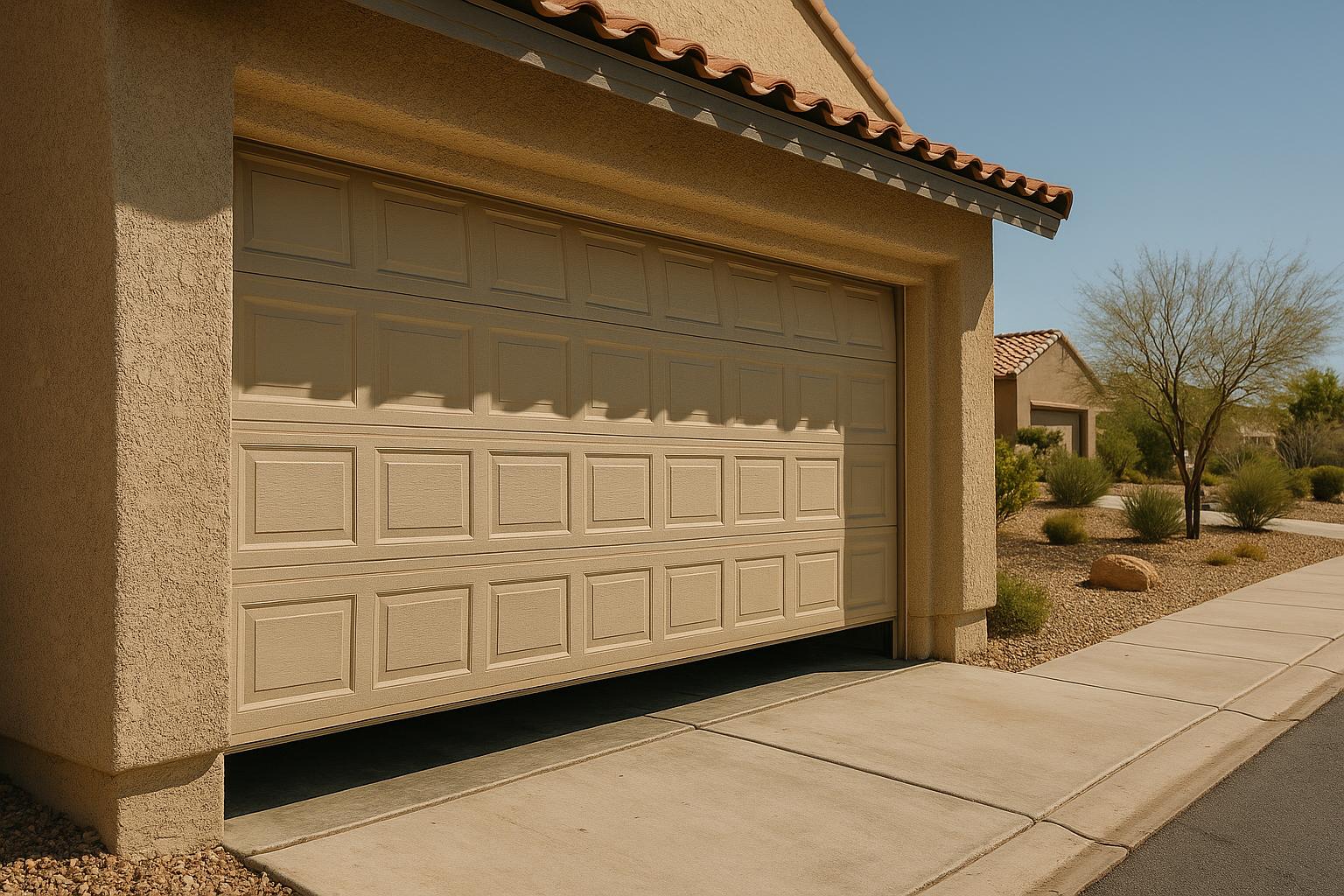
A Garage Door That Won't Close Is More Than an Annoyance
You press the button on your remote, the garage door starts moving down — and then it stops. Maybe it reverses back up. Maybe it gets stuck halfway. Or maybe it closes most of the way but leaves a gap at the bottom that lets in dust, heat, and unwanted critters.
If you're a homeowner in Las Vegas, a garage door that won't close all the way is more than a minor inconvenience. It's a security vulnerability, an energy efficiency problem, and an open invitation for the desert elements to invade your home. The good news is that many of the causes are identifiable, and some are even fixable without professional help. Let's walk through the most common reasons your garage door refuses to close completely and what you can do about each one.
1. Something Is Blocking the Safety Sensors
This is the most common reason a garage door reverses or refuses to close, and it's often the easiest to fix. Every modern garage door opener manufactured after 1993 is equipped with photoelectric safety sensors — small devices mounted on either side of the door near the ground. These sensors send an invisible beam across the opening. If anything breaks that beam, the door won't close.
Here's what to check:
- Remove obstructions. Look for boxes, trash cans, toys, shoes, or garden tools that may be sitting in the sensor's path.
- Clean the sensor lenses. In Las Vegas, dust and sand accumulate quickly. A dirty lens can trick the sensor into thinking something is blocking the beam. Wipe both lenses gently with a soft cloth.
- Check the alignment. Each sensor typically has a small LED light. If one is blinking rather than glowing steadily, the sensors are likely misaligned. Gently adjust the sensor bracket until both lights are solid.
If cleaning and realigning doesn't solve the problem, the sensors or their wiring may need to be replaced — a job best left to a professional.
2. The Close-Limit Switch Needs Adjusting
Your garage door opener has a setting called the close-limit switch (sometimes called the travel limit). This tells the opener how far the door needs to travel before it's considered fully closed. If this setting is off, the opener may think the door has hit an obstruction before it actually reaches the ground, causing it to stop short or reverse.
On most openers, you'll find travel limit adjustment screws on the back or side of the motor unit. Turning the "down" limit screw slightly — usually in small increments — can extend the door's travel distance. Consult your opener's manual for specific instructions, and make adjustments gradually. Over-adjusting can cause the door to press too hard against the floor, which creates its own set of problems.
3. The Tracks Are Dirty, Bent, or Misaligned
Your garage door rides along metal tracks on both sides. If those tracks are dirty, dented, or out of alignment, the door can bind, stick, or stop before reaching the ground.
Visually inspect the tracks from top to bottom. Look for:
- Built-up grime, grease, or debris
- Visible dents or bends in the metal
- Gaps between the track and the rollers
You can clean tracks with a damp cloth and a mild household cleaner. Minor bends can sometimes be gently tapped back into place with a rubber mallet, but significant damage or misalignment usually requires professional track repair or replacement. Forcing a door along damaged tracks can cause further damage to the rollers, cables, and even the door panels themselves.
4. Worn or Broken Rollers
Garage door rollers — the small wheels that guide the door along the tracks — wear out over time. Cracked, chipped, or seized rollers create friction that can prevent the door from traveling its full range of motion. You might hear grinding, squealing, or popping sounds as the door moves.
Nylon rollers tend to be quieter and last longer than steel ones, especially in the dry Las Vegas climate where metal components can suffer from lack of humidity. Replacing rollers involves removing and reinstalling the door's hinge brackets, which can be dangerous if you're not experienced. We recommend having a technician handle roller replacement to avoid injury or further damage.
5. The Garage Door Opener Is Malfunctioning
Sometimes the problem isn't mechanical — it's the opener itself. Circuit board failures, worn gears, or a dying motor can all cause the door to behave erratically. Signs that your opener may be the culprit include:
- The motor runs but the door doesn't move
- The door moves unevenly or jerks during operation
- The opener's lights blink a specific number of times (this is often a diagnostic code — check your manual)
- The remote works intermittently or not at all
Opener issues are especially common in the Las Vegas valley, where garage temperatures can soar well above 120°F in summer. That kind of heat takes a toll on electronic components and lubricants inside the motor housing. If your opener is more than 10-15 years old and acting up, replacement is often more cost-effective than repair.
6. Damaged or Warped Door Panels
If one or more panels of your garage door are bent, cracked, or warped, the door may not sit flush against the ground when closed. Panel damage can result from accidental impacts, wind damage, or prolonged sun exposure — all common scenarios in Henderson, Summerlin, and throughout the Las Vegas area.
In some cases, individual panels can be replaced without installing an entirely new door. However, if the damage is widespread or the door is old enough that matching panels are no longer available, a full door replacement may be the better investment.
7. The Weatherseal Is Worn or Missing
Sometimes the door technically closes all the way, but there's still a visible gap at the bottom. This is often caused by a worn, cracked, or missing bottom weatherseal (also called a bottom seal or astragal). This rubber strip runs along the bottom edge of the door and creates a tight seal against the garage floor.
In the desert climate, rubber weatherseals dry out and crack faster than they would in more humid regions. Replacing the bottom seal is a relatively inexpensive fix that can improve your garage's energy efficiency, keep out dust and pests, and restore a proper seal.
When to Call a Professional
Some of the fixes above — cleaning sensors, wiping down tracks, replacing a weatherseal — are manageable DIY tasks. But others involve components under extreme tension or complex electrical systems. Here's a simple rule of thumb:
- DIY-safe: Cleaning sensors and tracks, checking for obstructions, replacing the bottom seal
- Call a pro: Adjusting springs or cables, replacing rollers, repairing or replacing the opener, fixing bent tracks, replacing panels
Garage door springs and cables are under tremendous tension and can cause serious injury if handled improperly. If you're unsure about any repair, it's always safer and often cheaper in the long run to call an experienced technician.
Keep Your Garage Door Working in the Las Vegas Heat
A garage door that won't close all the way compromises your home's security, energy efficiency, and comfort — three things no Las Vegas homeowner can afford to lose. Whether you're dealing with a sensor issue in Spring Valley or a worn-out opener in North Las Vegas, diagnosing the problem early can save you from a much bigger repair bill down the road.
At Las Vegas Overhead Door Co, we help homeowners and businesses across the valley get their garage doors back on track — literally. If your door won't close and you can't figure out why, give us a call. We'll show up on time, diagnose the issue, and get it fixed right the first time.