
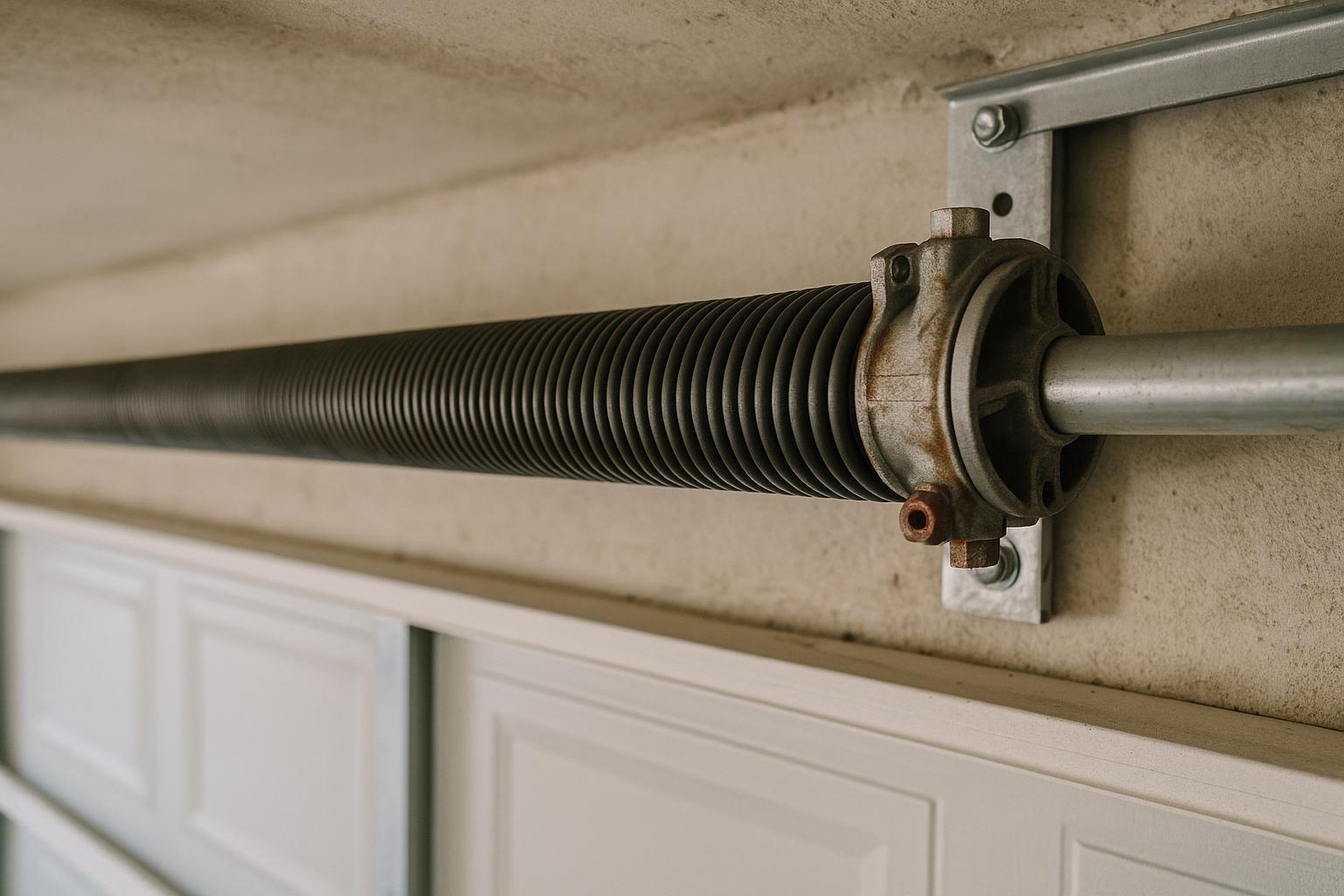
Your Garage Door Springs Are Doing More Work Than You Think
Most homeowners in Las Vegas open and close their garage doors multiple times a day without giving it a second thought. But behind that smooth, effortless motion is a set of tightly wound springs doing the heavy lifting — literally. Your garage door springs counterbalance the full weight of the door, which can range from 130 to over 400 pounds depending on the size and material.
When those springs start to wear out or break, your garage door becomes difficult to operate, potentially dangerous, and expensive to ignore. Knowing the warning signs of failing springs can help you act before a small issue turns into an emergency repair.
How Long Do Garage Door Springs Last?
The average garage door spring is rated for about 10,000 cycles, with one cycle being a single open-and-close. For a typical household that uses the garage door four times a day, that works out to roughly seven to ten years of use.
However, several factors can shorten that lifespan:
- Extreme temperature swings: Las Vegas sees scorching summers and surprisingly cold winter nights. Metal expands and contracts with temperature changes, which accelerates wear on springs over time.
- Lack of maintenance: Springs that aren't lubricated regularly develop more friction and corrode faster.
- Rust and corrosion: While Las Vegas has low humidity compared to coastal cities, dust and grit can still accumulate on springs and cause abrasion.
- Heavy doors: Larger or insulated garage doors put more stress on the spring system, reducing overall lifespan.
7 Warning Signs Your Garage Door Springs Are Failing
Springs rarely fail without giving you some advance notice. Here are the most common signs that it's time for a replacement.
1. The Door Feels Unusually Heavy
If your garage door suddenly feels much heavier when you try to lift it manually, the springs are likely losing tension. A properly balanced door should stay in place when lifted halfway and released. If it slams down, your springs are struggling.
2. The Door Opens Unevenly or Crooked
When one spring wears out faster than the other — or if only one spring breaks — the door can tilt to one side as it opens. This uneven movement puts stress on the tracks, rollers, and opener, potentially causing additional damage.
3. You Hear a Loud Bang from the Garage
A broken torsion spring releases its stored energy all at once, producing a loud bang that many homeowners describe as sounding like a gunshot or a car backfiring. If you heard a sudden loud noise from your garage and the door won't open, a broken spring is the most likely cause.
4. There's a Visible Gap in the Spring
Take a look at the torsion spring mounted above your garage door. If you see a visible gap or separation in the coil, the spring has snapped and needs to be replaced immediately.
5. The Opener Strains or Stops Mid-Cycle
Your garage door opener is designed to move a balanced door, not lift the full weight on its own. When springs fail, the opener has to work much harder. You might notice it straining, moving slowly, or stopping partway through the cycle. Continuing to use a failing opener in this condition can burn out the motor.
6. Cables Are Loose or Hanging
The cables on either side of your garage door work in tandem with the springs. When a spring breaks, the cables can lose tension and appear loose, tangled, or hanging off the drum. Loose cables are a clear indicator of a spring problem.
7. The Door Closes Too Fast
A garage door that slams shut instead of lowering smoothly is dangerous. This typically means the springs are no longer providing enough counterbalance to control the door's descent. This is especially concerning for homes with children or pets.
Can You Replace Garage Door Springs Yourself?
We understand the DIY spirit — and Las Vegas homeowners are no strangers to tackling home projects. But garage door spring replacement is one job that should always be left to trained professionals. Here's why:
- Extreme tension: Torsion springs are wound under tremendous force. A spring that slips during installation can cause serious injury or even death.
- Specialized tools required: Proper replacement requires winding bars, clamps, and precise calibration that most homeowners don't have.
- Matching the right spring: Springs must be matched to the exact weight and size of your door. An incorrect spring will cause balance problems and premature failure.
- Warranty concerns: Many garage door and opener warranties are voided if repairs are performed by someone other than a licensed technician.
At Las Vegas Overhead Door Co, our technicians handle spring replacements across Las Vegas, Henderson, Summerlin, and the surrounding areas every day. We carry the most common spring sizes on our trucks so we can usually complete the job in a single visit.
Torsion Springs vs. Extension Springs: What's the Difference?
There are two main types of garage door springs, and knowing which type you have can help you communicate with your repair technician.
Torsion Springs
Torsion springs are mounted on a metal shaft directly above the garage door opening. They use torque — a twisting force — to lift the door. Torsion springs are the more common type in modern garage doors and are generally considered safer and longer-lasting.
Extension Springs
Extension springs run along the horizontal tracks on both sides of the door. They stretch and contract to provide lifting force. Extension springs are more common in older homes and lighter doors. They should always have safety cables running through them to prevent the spring from becoming a projectile if it breaks.
If your home in North Las Vegas or Spring Valley still has extension springs without safety cables, we strongly recommend having a technician add them or upgrading to a torsion spring system.
How Much Does Spring Replacement Cost?
The cost of replacing garage door springs varies depending on the type of spring, the size and weight of your door, and whether one or both springs need replacement. As a general guideline, most homeowners in the Las Vegas valley can expect to pay between $150 and $350 for a professional spring replacement, including parts and labor.
We always recommend replacing both springs at the same time, even if only one has broken. If one spring has reached the end of its lifespan, the other is likely not far behind. Replacing both saves you from paying for a second service call in the near future.
Prevent Spring Failure with Regular Maintenance
A little preventive care goes a long way in extending the life of your garage door springs:
- Lubricate springs every few months with a silicone-based spray to reduce friction and prevent rust.
- Test the door balance by disconnecting the opener and lifting the door manually. It should stay in place at the halfway point.
- Schedule annual maintenance with a professional who can inspect the springs, cables, rollers, and hardware for early signs of wear.
Las Vegas Overhead Door Co offers maintenance plans designed to catch problems early and keep your garage door operating safely year-round. Whether you're in Enterprise, Spring Valley, or anywhere across the valley, our team is here to help.
Don't Wait for a Broken Spring to Ruin Your Day
A broken garage door spring always seems to happen at the worst possible time — when you're late for work, loading groceries, or trying to get the kids to school. If you've noticed any of the warning signs above, don't wait for a complete failure. Contact Las Vegas Overhead Door Co today to schedule an inspection or spring replacement. We show up on time, carry the parts we need, and get your door back in working order fast.