
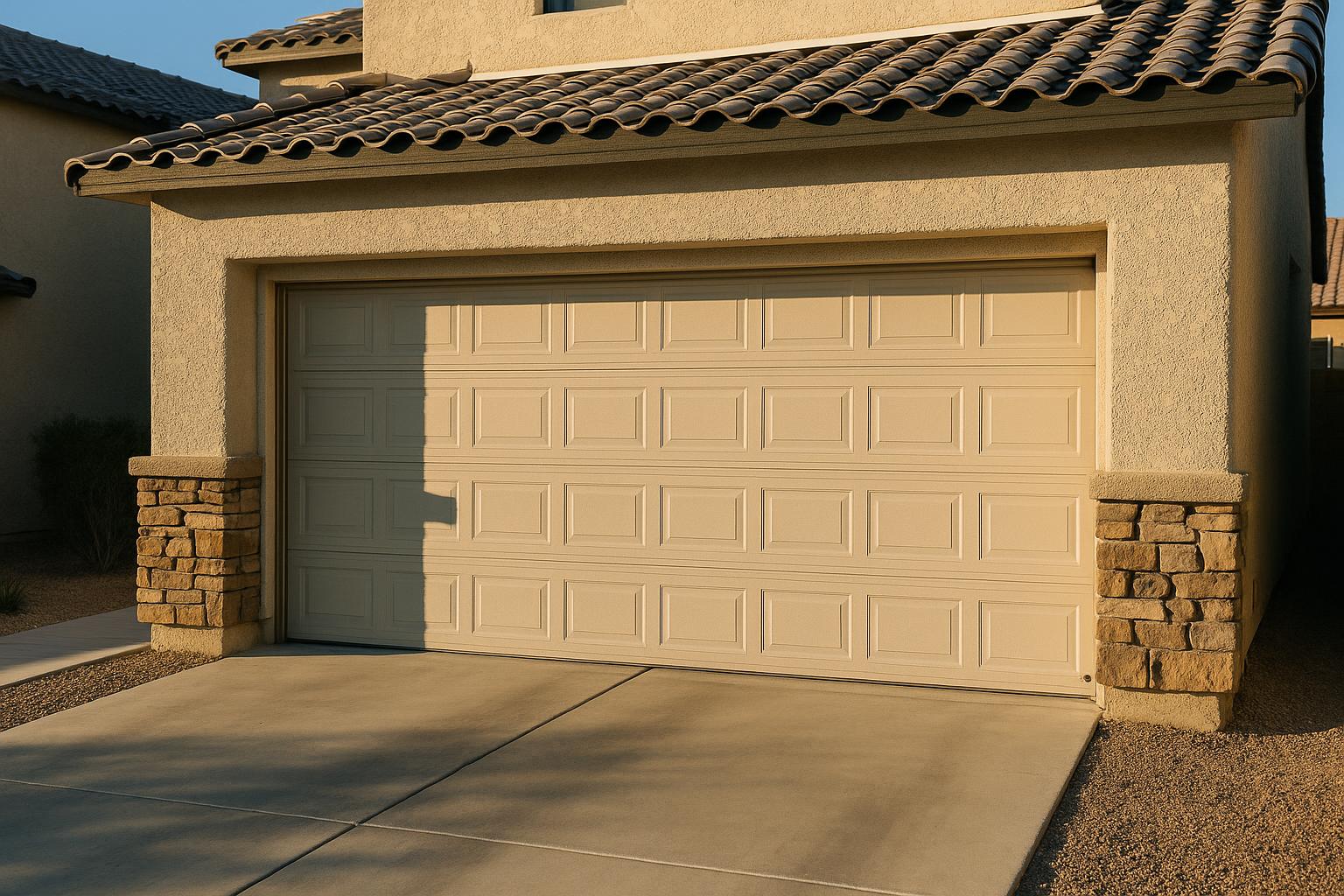
Your Garage Door Is More Powerful Than You Think
Most homeowners in Las Vegas use their garage door multiple times a day without giving it a second thought. It goes up, it comes down, and life moves on. But here's something worth pausing for: your garage door is the single largest moving object in your home. It can weigh anywhere from 130 to over 400 pounds, and it's held in place by components under extreme tension.
When everything works correctly, modern garage doors are remarkably safe. But when safety features fail — or when homeowners don't know they exist — the consequences can be serious. Injuries from garage doors send thousands of people to the emergency room every year, and many of those incidents are entirely preventable.
Whether you've lived in your Las Vegas home for decades or just moved into a new build in Summerlin or Henderson, understanding your garage door's safety features could protect your family, your pets, and your property.
The Two Safety Features Required by Federal Law
Since 1993, federal law has required all garage door openers sold in the United States to include two critical safety mechanisms. If your opener was installed before that year — or if these features have stopped working — your garage door system is not up to code and poses a real risk.
1. Auto-Reverse Mechanism (Mechanical)
This feature forces the garage door to immediately reverse direction if it contacts an object while closing. It's designed to prevent the door from crushing anything — or anyone — in its path. The door should reverse within two seconds of hitting an obstruction.
You can test this yourself with a simple method:
- Place a 2x4 piece of lumber flat on the ground in the center of the door's path.
- Press the button to close the garage door.
- When the door contacts the wood, it should immediately reverse and open back up.
If the door doesn't reverse — or hesitates significantly before reversing — the force settings on your opener may need adjustment, or the mechanism itself may be failing. Either way, stop using the door and call a professional.
2. Photoelectric Sensors (Photo Eyes)
These are the small sensors mounted on either side of your garage door, about six inches off the ground. They project an invisible beam across the opening. If anything breaks that beam while the door is closing, the door automatically reverses.
In Las Vegas, these sensors take a beating. Dust, direct sunlight, and the general wear of desert conditions can knock them out of alignment or coat the lenses, causing them to malfunction. Common signs of photo eye problems include:
- The garage door reverses for no apparent reason while closing
- The door won't close at all, and the opener light blinks
- The small LED lights on the sensors are off or flickering
Cleaning the sensor lenses with a soft cloth and checking their alignment can often solve the problem. But if issues persist, the wiring or sensors themselves may need replacement.
Additional Safety Features Worth Knowing About
Beyond the two federally mandated features, modern garage door systems include several other safety components that Las Vegas homeowners should be aware of.
Manual Release Handle
Every garage door opener has a manual release — usually a red cord hanging from the track mechanism. Pulling this cord disconnects the door from the opener, allowing you to lift the door by hand. This is essential during power outages, which can happen during peak summer demand in the Las Vegas valley.
Make sure every adult in your household knows where the manual release is and how to use it. However, never use the manual release if you suspect a broken spring. Without functioning springs to counterbalance the door's weight, the door could come crashing down. If a spring is broken, call a garage door technician instead.
Rolling Code Technology
Older garage door openers used fixed codes that could be intercepted by tech-savvy thieves with simple devices. Modern openers use rolling code technology, which generates a new code every time you press the remote. If your opener is more than 15–20 years old, it may still use a fixed code, making your garage — and everything in it — vulnerable.
Timer-to-Close Feature
Many newer openers include a timer-to-close function that automatically shuts the garage door after a set period. This is particularly useful for homeowners who frequently forget to close the door — a bigger deal than you might think, since an open garage is one of the most common entry points for burglars in residential neighborhoods across Las Vegas, Henderson, and North Las Vegas.
Battery Backup
Some modern openers come equipped with battery backup systems that keep your garage door operational during a power outage. Given that Las Vegas summers push the electrical grid hard, this feature provides peace of mind and ensures you're never locked in — or out — of your garage.
A Simple Monthly Safety Check You Can Do Yourself
You don't need to be a technician to keep your garage door safe. A quick monthly inspection can catch problems before they become dangerous. Here's a simple checklist:
- Test the auto-reverse: Use the 2x4 method described above.
- Test the photo eyes: Wave an object (like a broom) through the sensor beam while the door is closing. It should reverse immediately.
- Visually inspect springs and cables: Look for signs of rust, fraying, or gaps in the springs. Never touch or attempt to adjust these components yourself.
- Listen for unusual sounds: Grinding, scraping, or popping noises during operation often indicate a problem developing.
- Check the door balance: Pull the manual release and lift the door halfway. A properly balanced door should stay in place. If it falls or rises on its own, the springs need attention.
- Inspect weather seals: Cracked or missing seals along the bottom and sides of the door can let in dust, pests, and heat — all common issues in the desert climate of Spring Valley and Enterprise.
When to Call a Professional
Some garage door maintenance is perfectly fine to handle on your own — cleaning sensors, lubricating hinges, and tightening loose hardware. But certain tasks should always be left to a trained technician:
- Spring replacement or adjustment
- Cable repair or replacement
- Opener motor repairs
- Track realignment
- Any situation where the door feels unusually heavy or won't stay open
Garage door springs and cables are under enormous tension. Attempting a DIY repair on these components is one of the most dangerous things a homeowner can do. Every year, people suffer serious injuries — broken bones, lacerations, and worse — from springs that release unexpectedly.
Keep Your Family Safe
Your garage door works hard for you every single day. In return, it deserves a few minutes of attention each month and a professional tune-up at least once a year. These small steps can prevent accidents, extend the life of your system, and give you confidence that the biggest moving part of your home is operating the way it should.
If it's been a while since your garage door's safety features were tested — or if something doesn't seem right — Las Vegas Overhead Door Co is here to help. We serve homeowners across Las Vegas, Henderson, Summerlin, and the surrounding communities with honest, professional garage door service. Give us a call, and we'll make sure your door is safe, balanced, and ready to perform.